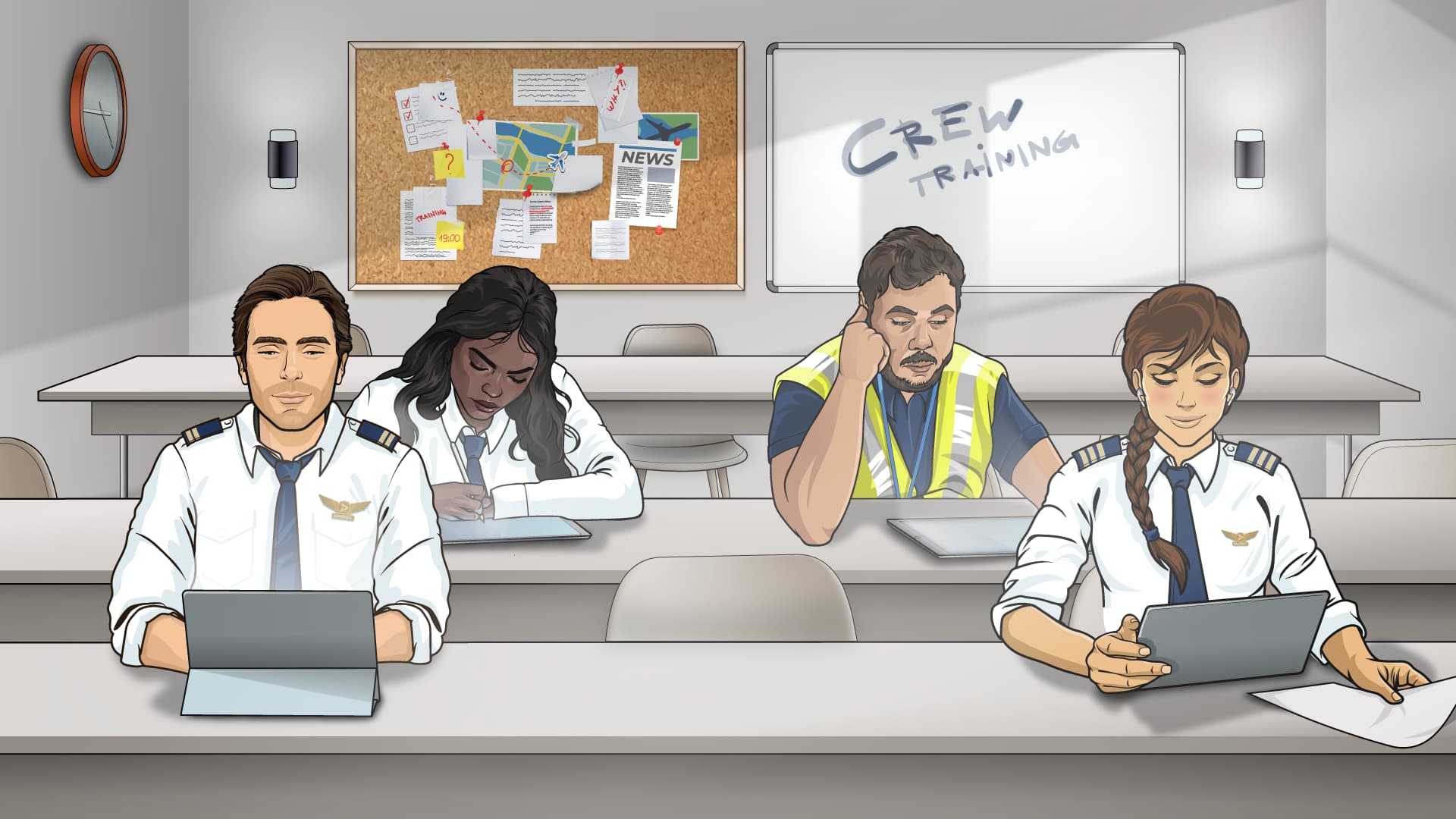
Why CRM Training Must Bridge the Gap Between Pilots and Cabin Crew
"We're all in this together—literally at 35,000 feet."
Let's be honest. When most people think about Crew Resource Management (CRM), they picture pilots in the cockpit making critical decisions during emergencies. But here's what we often forget: some of the most crucial safety moments happen when the cockpit door opens and the flight deck crew must work in full coordination with the cabin crew.
I recently spoke with Maria, a senior cabin crew member with 15 years of experience, who told me something that stuck with me:
"During a medical emergency over the Atlantic, the passenger was unconscious and we needed to divert immediately. The captain made the decision in 30 seconds, but it was the communication between all of us—pilots and cabin crew—that saved that passenger's life. We weren't just following procedures; we were thinking and acting as one crew."
That's CRM in its truest form. Not just technical skills or standard operating procedures, but the human element that makes everything else work.
The Reality Check: Where Traditional CRM Falls Short
For too long, CRM training has been delivered in silos. Pilots get their CRM training. Cabin crew get theirs. And somehow, we expect them to work perfectly together when it matters most.
But here's the problem: aviation safety doesn't happen in separate compartments.
When there's an emergency, a security threat, or even severe turbulence, the effectiveness of the response depends entirely on how well the entire crew—pilots and cabin crew together—can communicate, coordinate, and support each other.
Yet most CRM programs still treat these groups as if they operate independently. It's like training a soccer team where the defense never practices with the offense, then expecting them to win the World Cup. The result? Missed opportunities, communication breakdowns, and sometimes, preventable incidents.
I remember talking to Captain James, a veteran pilot with over 20 years of experience, who described a particularly challenging flight where this disconnect became painfully obvious. "We hit severe turbulence that lasted almost 20 minutes," he told me. "I was focused on getting us through it safely, but I had no idea that three passengers in the back had been seriously injured until we were already on the ground. If I had known earlier, I might have declared a medical emergency and gotten priority handling. The cabin crew were dealing with chaos, and I was flying blind—literally and figuratively."
That's the gap we need to bridge. Not through more procedures or additional training hours, but through a fundamental shift in how we think about crew coordination.
This isn't just better communication—it's shared situational awareness that leads to collaborative decision-making.
What Real Integration Looks Like
Picture this scenario: Captain Sarah is flying a transatlantic route when they hit unexpected severe turbulence. In the traditional approach, Sarah focuses on flying the aircraft while cabin crew deal with passenger issues separately. Communication is minimal and reactive—a quick call to check if everyone's okay, maybe a brief update on expected duration.
But what if it worked differently? What if Sarah, when the situation permits, communicated not just that they were in turbulence but her assessment of how long it might last, how severe it could get, and whether she's considering a route deviation? Meanwhile, the cabin crew leader provides real-time updates not just on injuries, but on passenger anxiety levels and whether the situation is escalating or stabilizing.
This isn't just better communication—it's shared situational awareness that leads to collaborative decision-making. When Sarah learns that several passengers have been injured and others are becoming increasingly panicked, she might choose to prioritize getting out of the turbulence quickly, even if it means burning extra fuel. When the cabin crew understands that the turbulence is likely to continue for another ten minutes, they can make informed decisions about whether to attempt first aid or wait for calmer conditions.
The difference is profound. In the first scenario, two parts of the same team are working separately toward the same goal. In the second, one integrated team is working together with complete information.
The Elements That Make It Work
Understanding what effective pilot-cabin crew CRM looks like requires breaking it down into core elements that go far beyond standard procedures.
Communication that actually works starts with recognizing that aviation communication has evolved far beyond the basic calls we learn in training. When a cabin crew member reports "passenger disturbance in row 15," that's information. When they add "passenger appears intoxicated, becoming aggressive with other passengers, and we have an air marshal on board who's assessed the situation," that's context that completely changes how the flight deck responds.
This kind of communication requires trust and understanding between departments. Pilots need to understand what cabin crew are dealing with and why their observations matter. It's about creating a common language that goes beyond technical jargon to include the human elements that often determine outcomes.
Shared situational awareness goes deeper than everyone knowing their individual roles—it's about understanding how those roles interconnect and influence each other. When cabin crew notice ice forming on the wing during ground operations, they're not just reporting a maintenance issue—they're contributing to the flight's safety assessment. A cabin crew member who understands how weather affects flight planning can provide more relevant observations. A pilot who understands passenger psychology can make better decisions about how to communicate during challenging situations.
Collaborative decision making challenges traditional hierarchical structures without undermining necessary authority. The captain remains the final decision-maker, but the quality of those decisions improves dramatically when they're based on input from the entire crew. During a recent medical emergency, Captain Lisa told me how her decision to divert was influenced not just by the medical condition of the passenger, but by her cabin crew's assessment of available onboard medical resources and the potential for the situation to escalate.
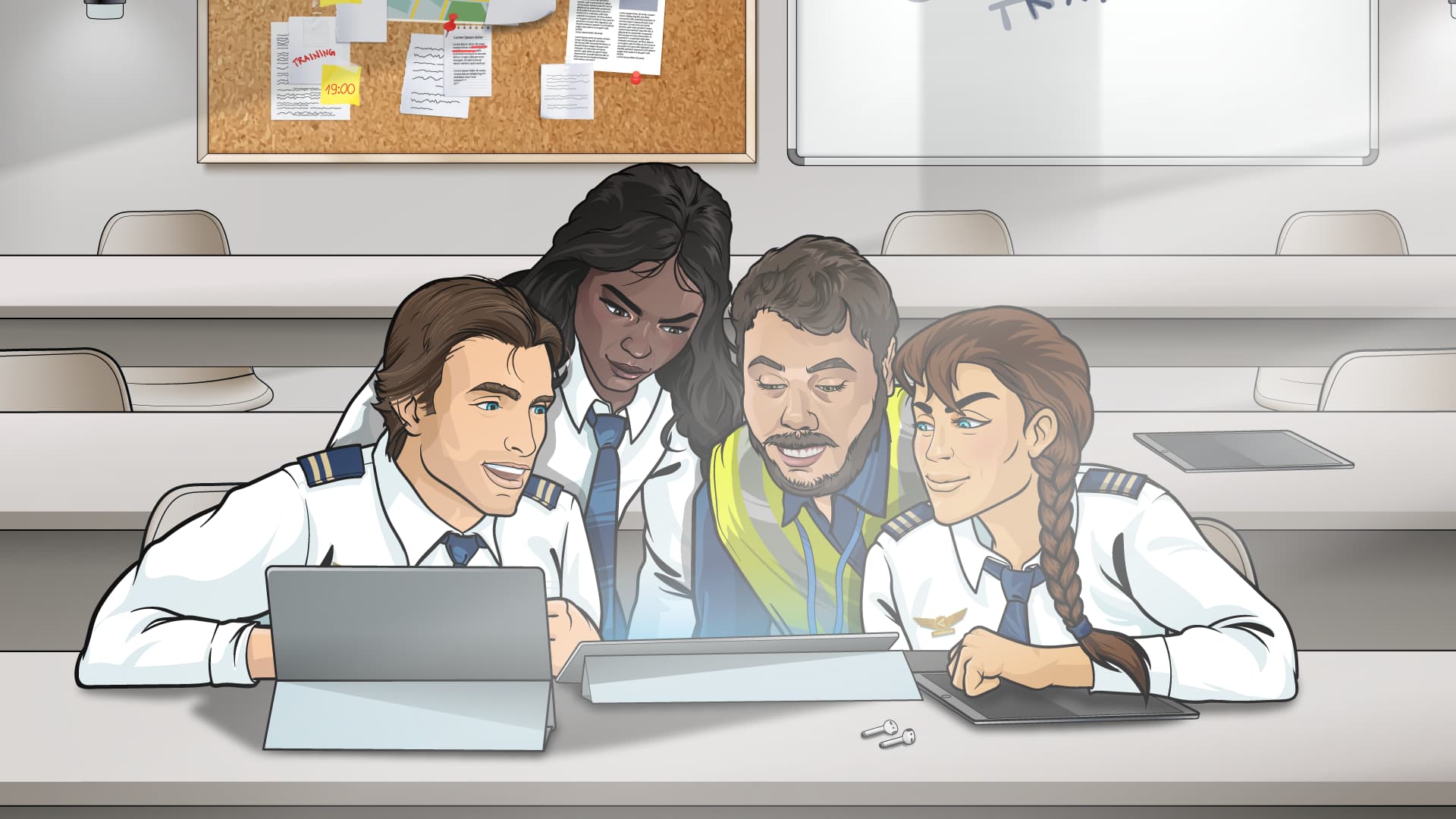
"I could have made the diversion decision based purely on the medical emergency," she explained, "but understanding the full human context helped me choose the right airport—one with excellent medical facilities but also one where we could manage the passenger transfer effectively. That decision was only possible because my cabin crew gave me the complete picture, not just the medical facts."
Stress and workload management becomes a team effort rather than individual challenge. When Captain Mark faced a complex electrical problem that required extensive troubleshooting, his cabin crew leader took on all passenger communication duties, allowing him to focus entirely on the technical challenge. But she didn't just make announcements—she actively managed passenger anxiety and created an atmosphere of calm confidence that prevented the situation from escalating.
Error management and recovery becomes more effective when it involves cross-departmental checking and support. Aviation incidents rarely result from single errors—they typically involve chains of small mistakes that compound into larger problems. When crew members from different departments are actively engaged in error detection and recovery, these chains can be broken much earlier.
Breaking Down the Barriers
The biggest challenge in developing integrated CRM isn't technical—it's cultural. Aviation has strong traditions of departmental specialization, and these traditions have served the industry well. But as aviation becomes more complex and passengers become more diverse, the boundaries between these specializations are blurring.
Consider the increasing complexity of medical emergencies on modern flights. A passenger having a heart attack isn't just a medical issue—it's a decision-making challenge that involves medical assessment, diversion planning, passenger management, crew coordination, and operational considerations. The quality of the response depends entirely on how well all these elements work together.
Security threats present similar challenges. When cabin crew identify potential security risks, their assessment needs to be communicated to pilots in ways that inform operational decisions without creating panic. Even routine operations benefit from better integration—fuel efficiency improves when cabin crew coordinate service timing with flight operations, and customer experience improves when all crew members understand how their individual performance contributes to the overall passenger experience.
When Captain Rodriguez told me about a flight where excellent crew coordination prevented what could have been a serious incident, he didn't talk about following checklists or standard operating procedures. He talked about trust, communication, and mutual support.
The Human Factor That Changes Everything
At its core, effective CRM integration is about recognizing that aviation safety is fundamentally a human challenge. Aircraft systems are remarkably reliable. Weather forecasting is increasingly accurate. Navigation technology is incredibly precise. But the human element—how people communicate, make decisions, manage stress, and work together—remains the critical variable in most aviation scenarios.
When Captain Rodriguez told me about a flight where excellent crew coordination prevented what could have been a serious incident, he didn't talk about following checklists or standard operating procedures. He talked about trust, communication, and mutual support.
"My first officer noticed something I missed, my cabin crew leader provided crucial information about passenger conditions, and our ground crew gave us insights about a maintenance issue that wasn't in the logbook," he explained. "None of us could have handled the situation alone, but together we had all the pieces we needed. That's when I really understood what CRM is supposed to be about."
Making It Personal
Whether you're a pilot, cabin crew member, or training manager, integrated CRM isn't just about following procedures—it's about being part of something bigger than yourself. For pilots, this means recognizing that their decisions affect everyone on board and that insights from cabin crew can make them better decision-makers. For cabin crew, this means understanding that their observations and expertise are crucial safety inputs that directly influence flight operations—they're safety professionals whose insights can prevent incidents and improve outcomes.
For training managers, this represents an opportunity to break down silos and create truly integrated safety cultures. Instead of delivering separate training programs that hope to work together, they can create learning experiences that prepare crews for the reality of coordinated operations.